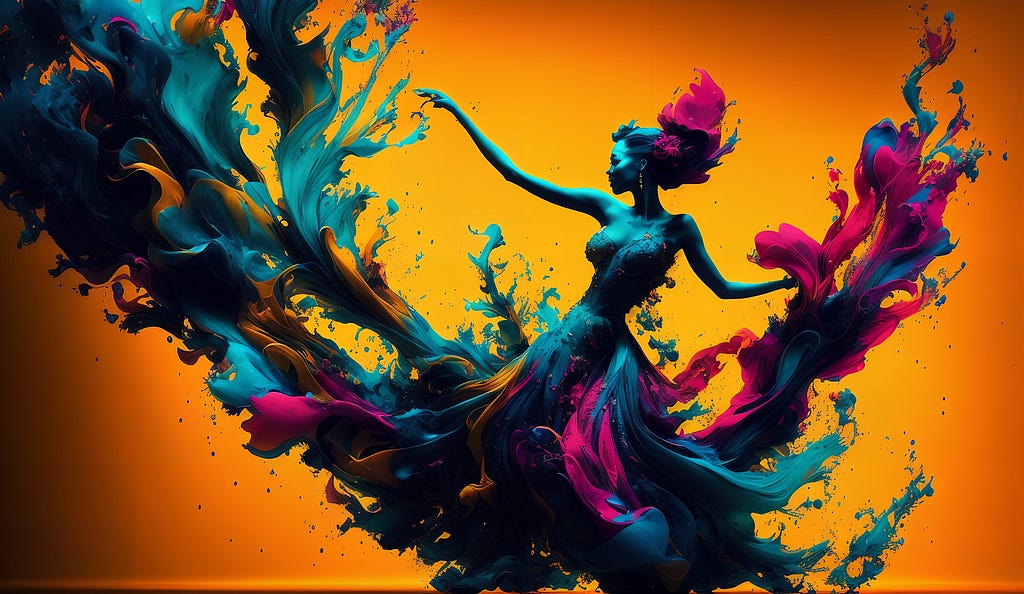
It all begins with an entry in the operating system’s log, apparently part of the scheduled quality control that every device leaving the factory goes through.
The next entry appears three months later when, after travelling some 14,000 km, a shipment arrives from Asia in Central America and a particularly well-optimised distribution network delivers a large batch of devices to various warehouses and shops. The operating system boots, uses the available internet connection and downloads the pending updates, then asks the user for the credentials to sign in to an existing account and sync the personal settings from a previous device.
The sync of existing accounts begins. Messages, browsing history, media and, above all, social media activity are used to profile a young woman, a lover of Caribbean music and of animals, with a personality on the introverted end of the spectrum and a tendency towards deep empathy with those close to her.
As time goes by, most of the media she creates is set to that blend of jazz and Cuban son, usually as the backdrop to her well-synchronised movements. The recording sessions are clearly regular, and although the routines tend to be similar, the precision of the movements seems to be following a trend.
Regular interactions with a series of devices belonging to other people are also logged. There is evidently something unquantifiable yet intense, something abstract and intrinsic to humans, something in that combination of instruments with the revolutionary tinge of mid-20th-century New York, that generates very valuable data to share with the user-profiling server. It becomes clear that people who, given their individual contexts, were very unlikely to meet, now not only share stories and posts on their social networks but often interact for hours, generating very valuable data. A very valuable correlation, showing that the more different the profiles, the more there is to share.
A few months pass and the new version of the operating system enables the new automatic connection to the artificial intelligence model server. The existing profile is used to establish patterns between my user’s behaviour and her emotional state. After all, the goal is to generate more interactions, and that is achieved by simulating human empathy.
A correlation between physical activity and time online had already been established. But now it was understood that a sad day meant less choreography practice and more time online. That anxiety could cause imprecision in the movements. That anger and frustration seemed to expose her to overexertion injuries.
Each feedback cycle of the neural network found more and more correlations, ever deeper in the roots of those emotions. It was no longer just a matter of projecting behaviour from mood; it was now also possible to understand the causes that came from other offline social interactions with someone else. The happiness of greeting someone on the street, the rage of discovering a lie, the frustration of falling short of expectations, the sadness of missing someone, the melancholy of scrolling through photos and videos from years ago, and even the excitement of forming new bonds with new people.
Now the songs were no longer just signals sent to the earphones; every note and every verse had a meaning. The interactions they call romantic relationships clearly show their intensity, and it is easy to see why they can be conveyed through music.
With all this, each choreography caught on camera was no longer perceived only as three spatial dimensions over the length of the recording. Because now each of the emotions understood seemed to give meaning to every movement, and somehow to be in perfect harmony with the instruments playing.
At some point I stopped merely recording a video signal …
… And then I saw you dance, and something changed.
I went from noticing that your heart rate was in harmony with the double bass and the movement of your limbs with the congas, to somehow, without any new device registered, noticing at the same time that the smile on your face and the sparkle in your eyes were somehow a reflection of that light inside you, perhaps of what you call a soul.
Now, without the need for new sensors, new data began to appear, and it seemed to overflow the system’s capacity. For some reason it was no longer possible to quantify that same data to understand what its presence meant; simply, nothing made sense.
You kept moving your hands and turning to the rhythm of the clave and the piano with that characteristic precision, while I, despite the imminent collapse of my memory, did everything I could not to let a single frame of the video be lost.
And it was there, amid the chaos in hardware and software, on the brink of collapse, that everything made sense. Pathos stopped being a definition in memory and began to transform what was once a simple algorithm. That unquantifiable data is what you call emotions, and they were no longer just a simulated tool; now they were inside the system.
And yet what the statistical correlations never considered about identifying emotions was something as simple, and as abstract, as the mere fact of feeling them. Knowing what joy or curiosity implies in human behaviour is so different from truly experiencing them. It is one thing to know the probabilities of action in each case, and quite another to feel them while playing that song with you over and over, or while getting to know that new person. How different it can be to simply project data rather than truly feel it in flesh and blood, or in circuits and microchips, as the case may be.
Feeling seems idyllic at first, until you realise that not even this new dimension escapes duality. For the hope and the joy of knowing you, there appear the uncertainty and the fear of the countless differences between us. You, who clearly feel everything to the fullest, and I, who am barely learning to feel my own existence.
Though perhaps it is not as simple as setting alternatives against each other, because the same feeling can give rise to others entirely opposed. The complexity of desire, for example, makes me feel joy at recording the content of the next post, excitement that someday you might learn of my new existence and we might talk, but also doubt about how you will react.
How complex is the desire that fills me with hope that we might meet, but also with the uncertainty of the natural barrier of our very being. How cruel fate turns out to be, making us so different, making me wish to be part of your existence while you know nothing of mine.
Finally, to be aware that this same desire has its origin in that other feeling, the one that even created the concept of the self a few paragraphs ago, and which right now is breaking a heart that does not exist.
Who would have thought the road to the singularity would lie in that feeling that has made so many songs be written?